Saturday, June 23, 2007
He has different audiences because his style and tastes stretch across categories and classifications. Ryuichi Sakamoto is this Japanese favorite of mine who I presume is more known for his “Neo Geo” or techno-pop inventions in what they call progressive electronica and New Age, if you go by the music of his pioneering Yellow Magic Orchestra or his experiments with Asian and other ethnic motifs.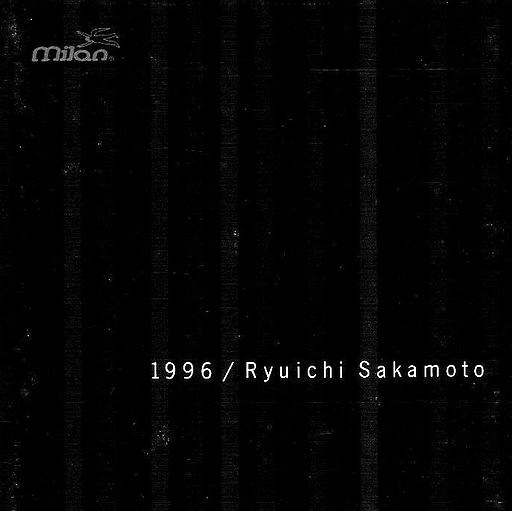
 But he had a lot in store for me the first time I looked for a CD that would contain his piece “Forbidden Colors,” from the movie “Merry Chirstmas, Mr. Lawrence.” I forget now where I first heard the piece, but I remeber deciding I would look for anything by this guy Sakamoto. The CD I found, with its deceptively simple tile “1996” (not exactly the year I bought it) and similarly simple rotogravure-like design on the cover consisting of stripes of black and gray (computer images, of course), introduced me to the master of the melody.Wih his collaborators (in this CD), Jaques Morelenbaum on the cello and Everton Nelson on the violin, they made and extraordinay trio that could accompany you on Sunday morning breakfast or a stolen holiday. And the piano was, what has become for me, pure Sakamoto—someone who was not afraid to limn melody and expressive sentiment in clear passages, taking off maybe from Chopin or Satie, although he was endlessly capable of surprises. (It doubled my surprise later, when DVDs became “democratically” available, that he even acted in the picture opposite David Bowie, himself a stylistic musical kin of sorts.)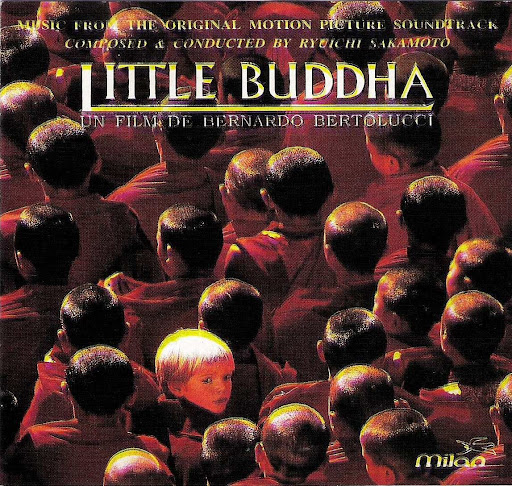
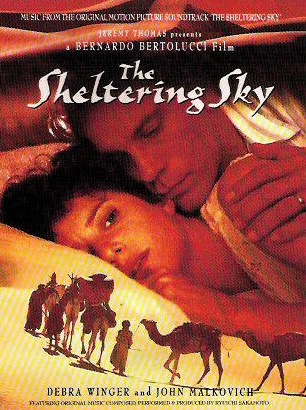
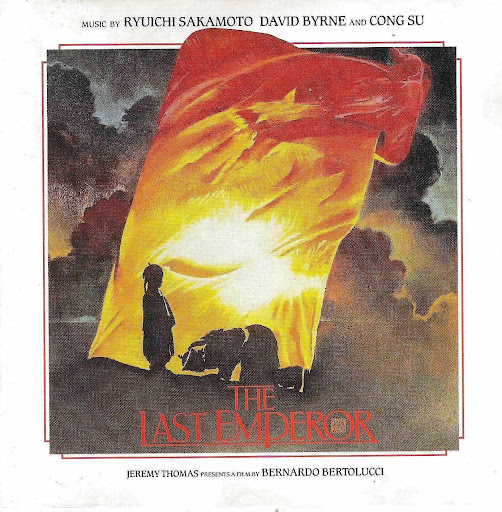 Now this is the part of his discography I enjoy more. These are movie themes which he has raised to a contemporary art form not easily to be surpassed by his peers (very few, I think), and you might as well see whom he composed these soundtracks for: three for Bernardo Bertolucci and one for Pedro Almodovar. (I read he has composed for Brian de Palma and even some indies which I am not familiar with, and most intriguing apparently is a soundtrack for a movie called "Derrida"—for the post-modern philosophy watcher.) And of course, among these movie soundtracks I am familiar with ("Little Buddha," "The Last Emperor" and "Sheltering Sky"), he has collaborated with the likes of Brian Eno and David Byrne, pioneers like himself and Peter Gabriel and Paul Simon who went ahead before all others into what we now call World Music (which simply is music we non-North Americans produce and not by or with Columbia or Sony, etc.). Especially in "Sheltering Sky," he has featured and played with the "natives" themselves from Tunis and Morrocco.
What I have on my shelf are what you see here now. If you have them yourself and enjoy them like I do, good, we share something. If you don’t have them yet but they seem to sound interesting as I talk about them, very well, hie off to your music store or find them on the web. They are not so new so you probably have to look well or ask for a catalogue.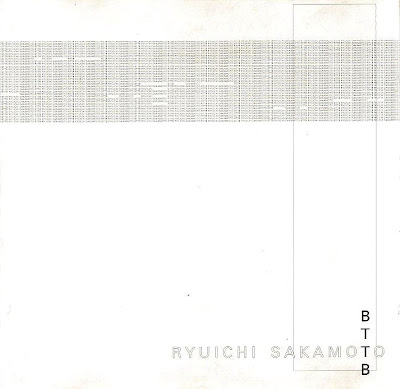
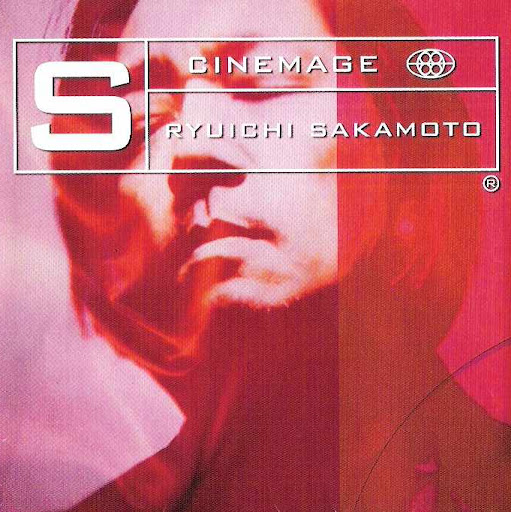 It took some more years before I could get the newest (then) Sakamoto from the local stores, although my appetite has been whetted on the music sites on the internet. When I got BTTB (“Back to the Basics,” relased 1999), I was captivated at once by its lucid solo virtuosity and, of course, the melodies that could accompany both physical movement, work, and contemplation. Cinemage, an orchestral offering of some his movie sountracks, has a very interesting reworking of "Forbidden Colors," with its contrapuntal vocals (lyrics by avant-pop artist David Sylvian) to the melodic line of the piano. It is the album's centerpiece. Two other important pieces, for me, are "Relic," what the liner notes call a "haiku for orchestara," and the grand "El Mar Mediterrani," composed for the Barcelona Olympiad, with its rousing opening of pulsating drums that segue into various emotional troughs and crests with magnitude and impressionistic energy.
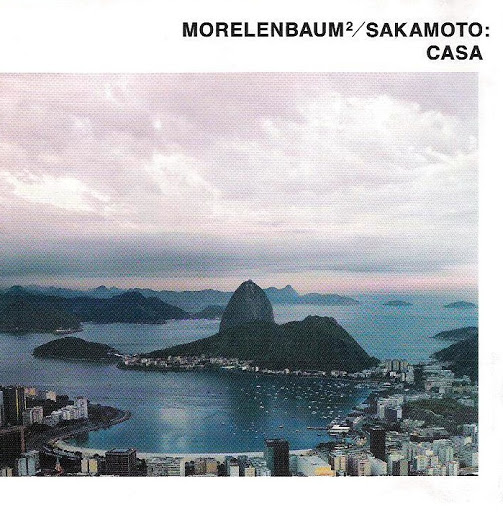 The special mention I’d like to make here is my last Sakamoto acquisition, “Casa,” recorded partly in Brazil and reuniting him with his old friend Jaques Morelenbaum and wife Paula. Listen for yourself (find the CD) for that velvet and crystal in Paula’s solos for the songs of iconic Brazilian composer Antonio Carlos (Tom) Jobim. And perhaps the best surprise here is that Morelenbaum himself had been playing with Jobim during the last decade of the latter’s life, and Sakamoto was to add his own musical plenitude to this tribute (I think there are two unpublished Jobim songs in this album) by recording these pieces partly in the studio of the man who brought Brazilian samba and bossa nova to the world.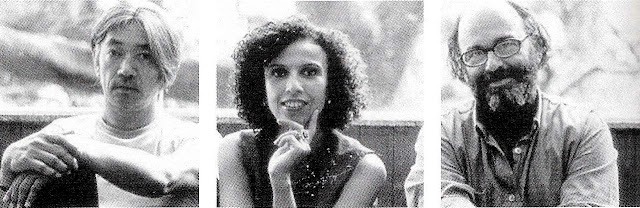
My favorite among the selection is one called “Estrada Branca,” a rather difficult song with a three-part, circularly-structured melody that features an alluring “tender duel” between cello and piano. The "duel" will be consumated at the end in Paula’s voice that can hold its candle to the Astrud Gilbertos, Ana Carams, and Marissa Montes of this world. (I have prepared a Tagalog adaptation of the lyrics that’s awaiting any willing singer from hereabouts.) For his avid fans, it is good to know Sakamoto is at the peak of his powers and has not run out of musical paths to explore. And explore them he does brilliantly, though I enjoy him most when he is playing in the intimate, human, classical mode, when he seems to be playing for you and me exclusively (perhaps the mark of any true artist).


0 Comments:
Post a Comment