Friday, June 22, 2007
Music I Like (Okay, Indulge Me—as if Blog isn’t an Indulgence Already!)
Posted by Marne L. Kilates at 9:46 AM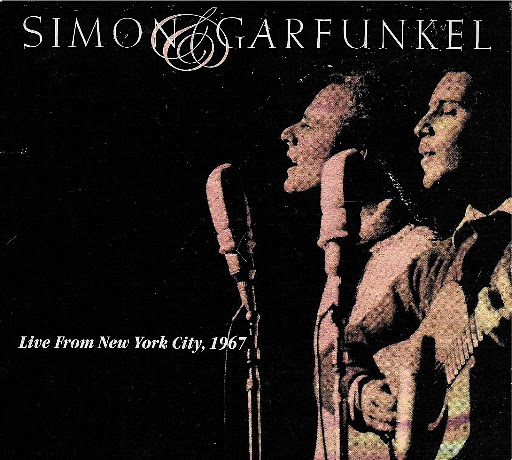 Those who are chary of the subject, click off and away. Because music is such a subjective thing, we don’t know when we might be imposing upon others when we play, or even talk about, our “own” music. And how we come to have “our own” music is due to a lot of factors. Radio, curiosity, upbringing, and taste, taste, taste. Radio is ubiquitous—stations play “the soundtrack of our lives.” Music, like the sense of taste, is ninety percent memory. Like the concept of comfort food, the petite madeleines of Marcel Proust, for instance—a cookie or limbuk, as we say in Bikol, that triggered his Remembrance of Things Past. A corny song you once hated because everybody liked it, it was on radio all day and a neighbor had a 45rpm record of it, suddenly sounds sweet when it’s played 30 years later and you’re wondering where the pretty girl next door (of whom you stole glances while the song was playing) had relocated. Or, say, what do you feel when somebody all of a sudden, amid bottles of beer and the last notes of “Love, Love Me Do,” sings the Tantum Ergo or No Mas Amor que el Tuyo? That’s music (and memory) from both extremes, one created by an industry, the other by ritual. One has its army of producers and promoters, and puppy love and movies, the other has its, well, maybe God on its side, represented by the priest, but more haunting in the memory is the slanting light of the purple dusk piercing through the arched windows of the side chapel of a musty Spanish stone church on a hill, the dusk as purple as the catafalque before which the priest sings Liberame Domine and the sacristan swings the censer, as purple as the sound of the bells tolling the Agonias in the falling dark… That’s my own memory as a once-sacristan and the music that accompanied that period of my life.
OUR SOUNDTRACK, EVEN IF WE'RE TONE-DEAF!
So music accompanies us through life, even if we are tone-deaf. The near tone-deaf go to karaoke bars, the near-perfect-pitch, apart from attending concerts, spend time rummaging through record bars… Well, like in life, in music we are either self-satisfied or constantly in search for the perfect noodle. What and where is that new sound, which new sound reminds me of something old, etc. etc. Listening to music is also driven by curiosity and some sort of recklessness going into unfamiliar territory, where one is apt to stumble into something unanticipated. It could be, you know, this thing between generations. My first-year college boy has his own station on the car radio, stored on the tuner’s pre-set memory (it’s button number four), and it's a station of, you guessed, alternative rock. I can tolerate it. I like some of the local bands, from Bamboo to whichever. Buttons number one to three are mine (I own and drive the car after all). Button number one is 98.7, the lone classical station operated by Protestant (musical) missionaries, two and three are “smooth jazz” or “crossover” stations, where I sometimes have to tolerate the wailing sax of Kenny G. 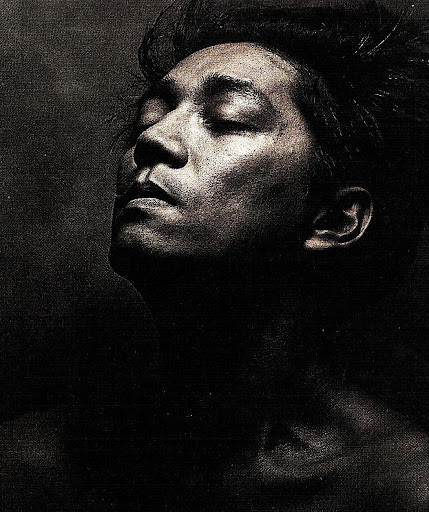 When I get tired of muzak, I revert to my own “driving music” from the CD changer. Out of sheer snobbishness and stupidity, I have never been a beneficiary of mp3 or any of those free download sites. I have a sizable collection of “my own” music, CDs built up from when they were first introduced around 1982, when they first cost P250 each while the vinyl LPs’ last price I can remember was P135. CDs were a luxury then, but they actually democratized music as the manufacturers raced each other putting out from titles from classical to jazz to pop. Either they digitally remastered existing recordings or they put out CD entirely recorded digitally. There used to be a classification code regarding the recording history of CDs—AAD for analog master to analog remastering and later converted digitally; ADD for analog to digital remastering and final recording digitally, and DDD for digital recording all throughout. You could see this code at the lower left or lower right corner of the CD cover in its jewel case. I guess they gave up the classification since music by the time of the 90s were all recorded entirely digitally. (All my music in my iTunes I've uploaded from my CD collection, as well as those in the car CD changer, which will only be upgraded only when I start buying again since I stopped lately; in the meantime I start listening again to the many CDs that have stayed idle in the shelves…Or, I burn my own playlists so I can have an FM radio-like selection playing in any of my systems.)
DO I KONW MY KID'S MUSIC?
Now, since the kid (who started this divagation ending in a short history of CDs) is getting to be a good guitar player (he has his own band), I wanted to “expose” him to my kind of music at least on the car stereo… hold it. How do I know he needs this “exposure”? Of course I sent him off to the UP College of Music extension classes for two summers, the end result of which was a little concert for me at home before I drove him to his second recital. And he showed off his riffs and licks playing guitar transpositions of “Ode to Joy” and the one-hit-wonder “Canon” of Pachelbel. Made me beam with pride, of course. But, again, while listening to a later-edition Tower of Power playing a sort of tribute to James Brown on the car stereo, I made the mistake of wondering aloud if James Brown was a blues singer, and my son corrects me saying, R&B, Daddy, rhythm and blues. I knew at that time he didn’t need an exposure from me. He can inherit my whole collection of CDs, and I know he’ll need that “alternative,” that new or old thing that he will have to discover for himself.
And since this random reminiscing is not for my son but for oldsters out there like me, from the Banggaan egroup, for instance, or any like-minded stranger who’ll stumble into this space, let will talk with impunity about the music I like. I wanted to start, not with a “Hit Back” sort of commercial nostalgia hawked on radio, but proceed at once to my favorite contemporary Japanese composer/ musician, who’s of the same generation as mine. So I’ll show his picture here first, but I’ll talk about the ones I’ve been listening to lately on my car stereo and on the home system in between my writing chores.
WHAT'VE I BEEN LISTENING TO LATELY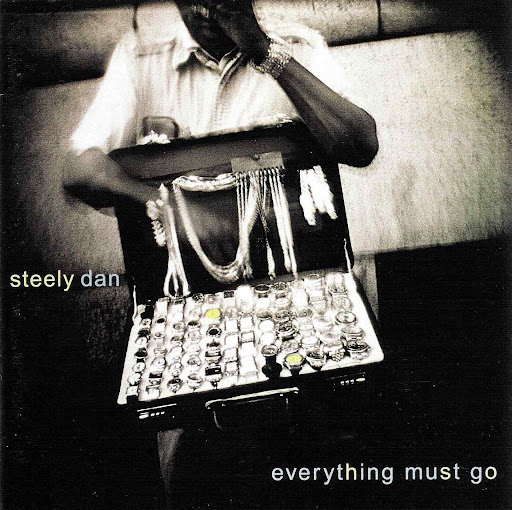 Which doesn’t mean “the latest.” Everyone probably knows every song by Simon & Garfunkel, but most of us probably forget that this “most successful folk rock duo of the 60s” (allmusic.com) was “almost” a member of the so-called British Invasion (of American pop) in that decade: S&G, or mainly Paul Simon, was conceived in the mid-50s, as the Beatles were struggling to become a group. So that when the Beatles (my watermark for ‘our’ own music called rock & pop) exploded on radio in 1963-64, Paul Simon had just come back from England and had re-teamed with high school pal Art Garkunkel (they called themselves Tom & Jerry, after the cartoon). In 1964, they cut their first album with Columbia, “Wednesday Morning, 3 A.M.” under the name that we know now. The title song, one of my favorites, is seldom heard now.
Everything else about this duo you probably know or can read anywhere (allmusic.com is one). It was therefore a great surprise for me when they issued this rather rare (to us Filipinos) album, “Live from New York, 1967” (2002; I came across it in a Manila music store a year later). This is different form their much later reunion album, “Live at Central Park” (1980s?), available on DVD. If you’re a devoted fan, or one who simply likes to have something from that era (they were still rising stars, before “Mrs. Robinson” and “Bridge…”), try looking for this CD. It contains a rare live performance and two rare songs, “You don’t Know where Your Interest Lies,” and “A Church is Burning.” If only for the liner notes, by Grammy Award-winning Rolling Stone rock and music reviewer Anthony de Curtis, you should have a copy:
“Not only the room, but the stage itself was packed when Paul Simon and Art Garfunkel peformed at Philharmonic Hall on January 22, 1967. Seats were set up behind the duo for this old-out hometown performance, and that sense of intimacy, at once relaxed and urgent, pervades every minute of ‘Live from New York City ,1967’. Everything about this show and its feels delicate in retrospect. It is a performance that epitomizes an era that, for variety of reasons, was about to disappear.”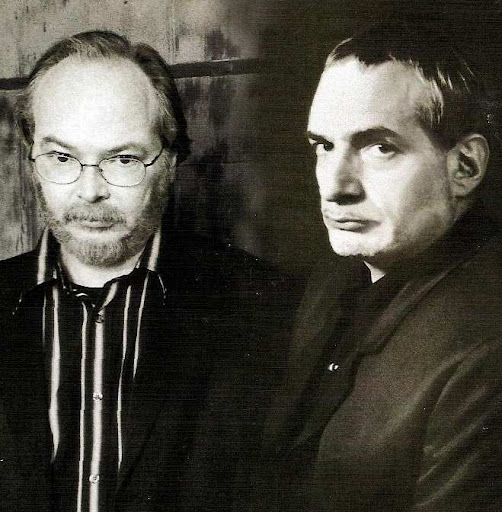
Let’s jump to 2003 when another album by another duo was recorded and maybe two years later when I made my periodical trip to the record store. This was the album that came shortly after the reunion CD of two years earlier after perhaps a 20-year absence. I refer to the meticulous, fastidious Kings of the Studio Session (a reputation justified by the musical and production quality of their CDs), the duo Steely Dan, or Donald Fagen and Walter Becker (with a name that comes from the nickname of a dildo in William Burrough’s “Naked Lunch,” and iconic novel of the 60s whereof the ideas for the lyrics of Steely Dan definitely originate).
Before then they had reunited with the CD “Two Against Nature,” my copy of which I can’t find now in my shelves. What I’ve been enjoying lately, however, (perhaps old hat to many “believers”) is “Everything Must Go.” After that reunion that seemed to go ‘against nature’, the CD seems now to be the “This is it, everything must go” notice from the aging duet. Fagen still has that steely pitch as high as Paul McCartney’s (try singing their songs in their keys), and Walter and he still write those often hermetic, cynical lyrics. Well, Steely Dan seldom fails for me: Take a look at two songs here, “The Last Mall,” “Things I Miss the Most,” and “Everything Must Go.” Whatever the charts or the reviewers say, the old Steely Dan and their inimitable music can be heared on this CD.
PHOTOS from the CDs (from top): Simon & Garfunkel in 1967; Ryuichi Sakamoto, from his "Beauty" album (vain but perhaps well-deserved, of whom I will write in subsequent postings); "Everything Must Go" CD; and the Fastidious Kings of the Studio Sessions themselves, Walter Becker & Donald Fagen


0 Comments:
Post a Comment