Friday, May 25, 2007
But their own place, of course, is never the edge for Ivatans. It's me who’s back from some brink. They may live at the geographic edge of the Philippines, and at the farthest borders of the Filipino mind (which sometimes thinks that the world is a cranium) but the Ivatans are, well, Filipinos. They probably love where they live but dream as much as others of relief and a better life at some place abroad, preferably not as a domestic (but as one if need be). 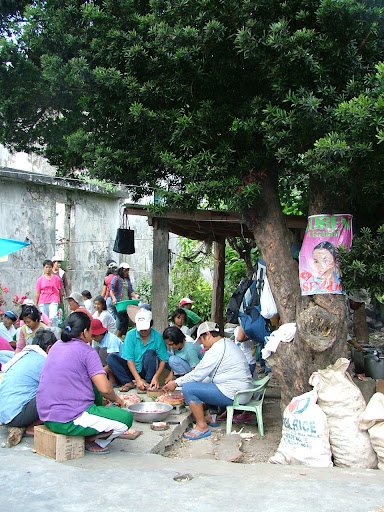 “Abrodista,” our guide Byron (who didn’t mention his namesake, the author of ‘Don Juan’) said, using this new term for those of that kind of mind. Batanes has its own share of emigrants to places like the U.S. and Canada. Ivatans, history books and Wikipedia will tell us, are descended from a certain tribe of aboriginal and non-Chinese Formosans (Taiwan in the Portuguese language), who lived on Orchid Isle (southernmost of Taiwan) and perhaps migrated en masse and on boats to our northernmost Batan, via of course the farthest dot on the map, Y’ami Isle. Formosa is also the name we gave to the variety of pineapples—more orange than yellow, unfailingly sweet, and always smaller than the Hawaiian variety of Dole and del Monte—that grows I think only in Camarines Norte and is always a handy pasalubong. I prefer this name to indirectly refer to a people who will invariably greet you Good Morning or Good Afternoon whenever and wherever you meet on a Basco street or in an Ivana church or on a boat to Sabtang.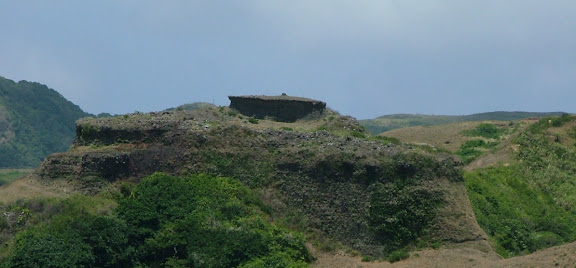

So, the Ivatan is perhaps as gentle as any provincial Filipino, but probably as Filipino when it comes to defending what he values. The pre-Hispanic idjang, a hilltop fortification, the Ivatan rebel-hero Aman Dangat, a local Dagohoy who suffered exile from Batan to Sabtang after refusing to submit to Spanish taxation, the communal ownership of mountain farmland marked by hedgerows, the communal and cooperative repair, maintenance and supply of vutsid or cogon for roofing of the traditional stone house, and the ubiquitous palek cane wine and Ginebra San Miguel, these mark the Ivatan—when he relaxes after fishing in not-too-tranquil waters, when he sings his laji, his love songs or what remains of rowing songs, when he dreams, like any human, of bettering his lot.
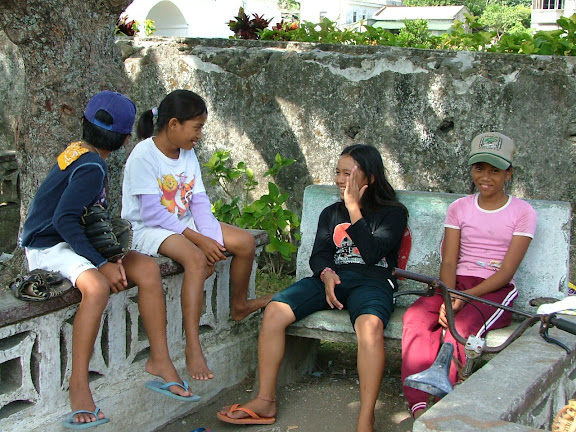
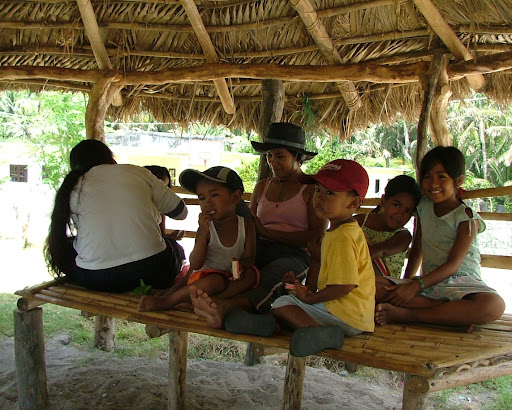
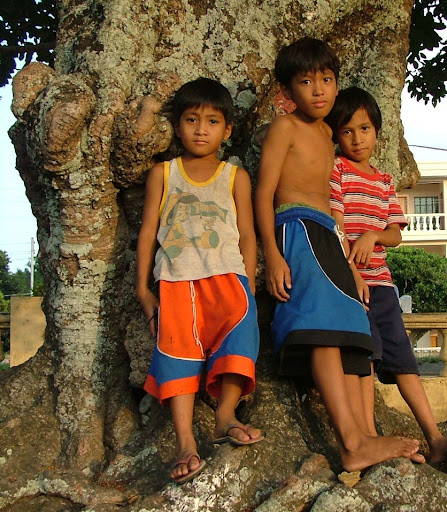
PHOTOS, from top: (1) Urchin trio at Basco park in sunset light; (2) Community cooking for a cooperative effort to fix someone's roof (the practice has been transferred from vutsid roofing to GI sheets or concrete, in this case). Note the grown Arius shrub in background, ubiquitous in Batanes; (3) Idjang, a pre-Hispanic Ivatan citadel, seen from the road between Savidug and Sabtang port; (4) Boys with uvi rootcrop in Diura fishing village; (5) Boat-hand line-fishing on our way to Sabtang; (6) Mahatao girls relaxing after a round of softball; (7) Family relaxing in Chavayan


0 Comments:
Post a Comment