Friday, August 24, 2007
Poems of Travel & the Poetry of Place in Rio Alma: A Translator’s Introduction
Posted by Marne L. Kilates at 6:40 PM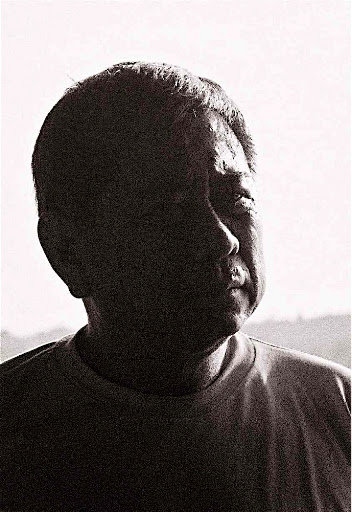
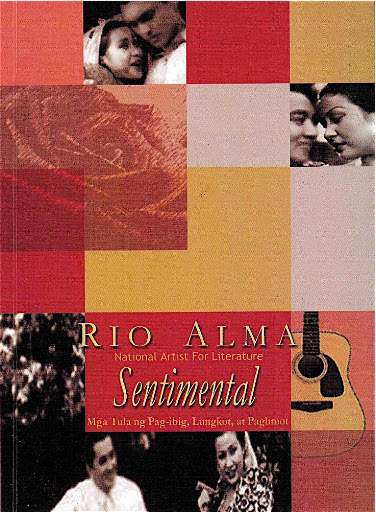
(My translation work sometimes overtakes my original work, but that’s okay. They nourish each other ultimately. Coming out soon from Anvil is the bilingual “Journeys, Junctures / Mga Biyahe, Mga Estasyon,” a collection of poems of travel from the last ten poetry books of National Artist Virgilio S. Almario, or Rio Alma in his poetry byline. The introduction led me to a newer summarization of my thoughts on translation, especially of poetry, and, for the interested reader, gives examples of Almario’s travel poetry in English. Here it is in whole.)
Translating the Lessons of the Sole
by Marne L. KilatesTravel, it has been said, educates us like no other. And nowhere is it a more effective educator than in poets. For poets, no matter how far into the world they venture, are forever looking inside—themselves and their surroundings. Whether travel is for work or leisure or survival, the strange places poets visit are always becoming intimate, because the act of poetry cannot stand strangeness.
The act of poetry is an act of knowing, often in a manner where the least words contain the most sense, and out of a few lines arise the magnitude of meaning—of a thing, a person, a place. And travel stretches taut the act of knowing because it is an act of movement, while poetry, in the words of Wordsworth, “slows us down.” And while travel wrests us away from the familiar, the poet is, in a manner of saying, continually trying to make himself feel at home.
Even while wearing his many hats as educator, activist, editor, journalist, university professor and cultural administrator, National Artist for Literature Rio Alma (Virgilio S. Almario in his role as critic and literary historian) has always been a poet and a traveler. The poems in this collection, the [fourth?] in Anvil’s series of Rio Alma poetry compiled by subject, are culled from his last ten poetry books that individually and invariably includes a poem or a group of poems on places where the poet has traveled.
Among these poems, too, might be felt most the characteristic tension between home and destination, the past and the present, and the febrile twilight zone in-between where the poet-traveler finds himself, whether it is in Vigan or Davao, Sta. Fe or at the foot of Mayon, or away from home shores in Sofia, Tbilisi, or Stonehenge.
And because Rio Alma is Rio Alma, the persona in these poems of wandering, sometimes of displacement and alienation, is always Filipino. It is this Filipino-ness, which governs all his poetry and resides naturally in the original, that the translator must, with any merit at all, transpose, “trans-relate” into this sometimes cumbersome, sometimes wanting, second language of ours.
Maybe it is the words themselves, often in their ruminative voice, especially on the Philippine places, that lend themselves well to another language. One will notice the length of many of the “local” poems. It is the voice of the advocate of the Filipino language speaking there. It is the intense voice of the student of Philippine history and society examining and reliving the Filipino experience. And it is, too, the voice of the philosopher meditating, amplifying an idea without the tight rein of form.
Finding himself in a remote village or a big regional city in the Philippine south, where war and poverty are parts of the landscape, the poet-traveler is a stranger in his own country. Tentatively he explores the landscape from his boarding house window: it is a market street of a garrisoned city where no smile “could be spread open like a palm branch… to drive away the stench of gunpowder” and “Nightfall comes early and the silence is / Deafening for the uninvited guest.”
On visiting Dapitan, “once the stop of stormy journeys,” the poet-traveler tries to recall the agony of the one who, more than a century before, in a nearby locale but under different circumstances at the birthing of our nation, sought a retiro. This was Talisay, where
The sighing of the surf seduced him to dreams of greenness,
To be safe and apart from his own published belief…
and its stolen, fleeting beauty gave rise to the heaviest guilt:
It became a sweet and fugitive love nest
While the social cancer spread
And he who diagnosed it had no cure to give…
Let us swing up the Philippine north in this most absorbing guided tour.I will confess to two old favorite poems when I first began translating Rio Alma (which should be more than a decade ago). “Vigan” and “Sta. Fe,” appear in this book together and in sequence. The opening lines of each for me crystallize his poetics that always begins with his being Filipino but which, I think, are some of his poems that perhaps will read the same way in any language.
Travel is like memory, like this journey
Of the eyes among old adobe, tile roof, narra
Spared by storm, temblor, fire, and war.
Every corner is archive, every stone a page of history.
(“Vigan”)
The pure, the fresh, the green you seek;
The precipice, the precipitous sense you expect.
Etched in every nook and cranny of the scene
Are the scar and shadow of some intense suffering…
(“Sta. Fe”)
We leave the “local” poems on this note—how the poet can awake for us emotions and memories that otherwise we cannot or would not speak about, like Theseus looking for his thread after “crossing the line” with nothing to declare for the local customs.
In the “foreign” poems, the voice becomes more satirical, self-deprecating, ironic. The poet-traveler retraces and reflects not with little irony on his own influences (as he does on borrowed memory in the Paris art district of Montmarte), his continuing journey as poet and artist in the changing world of the 21st century.
Still it is the same Filipino who wanders the globe in this age where everything seems to be happening all at the same time across the planet, and finds himself in a New York winter where everything “seems tall… and heavy.” He compliments the prompt arrival of the bus, looks over a passenger’s newspaper where he reads the headlines on “trouble in Iran.” The question he longs to ask another passenger is something out of Dante, “From what circle are you?”
In Asia’s two “sin cities” the poet-traveler takes up once more (or encounters) the theme of Hell. In the case of Singapore, hell is as much the loss of sex and as the loss of history. “Prosperity has no country,” and in that non-country everything and everyone is reduced to a number, and even death is “sentimental contraband.” Thailand’s Patpong is the more obvious hell, and there it is history—the noble memory of Siam and Ayuthhaya—buried in sex, whose viscid grime even the great Chao Phraya cannot wash away.
Art is its own hell, though perhaps a bit rarified, in the poet’s pilgrimage to Montmarte. He is unable to reclaim his own esthetic memory of it because his “…veneration is interrupted / By the flash of cameras / And the raucous commerce of colors.” Rain threatens:
When I sought shelter
I glimpsed an invitation
From a bit of bosom
Peeking from between the lapels
Of a slightly open overcoat.
(“Reclaiming Montmarte”)
Stranded in Vienna, the poet-traveler perhaps experiences his own hell. Like most Filipinos, he cannot help comparing things back home with those before him where “Everything moves to a single beat / In spite of the political / Debate on TV.” He listens to Mozart or Shoenberg “choked with envy: / Philosophic, Asiatic…”
Perhaps China is a better, more sympathetic memory, for even the language emulates the imagistic manner of Chinese poetry:
All day it was raining.
On the way back from Tian Gong,
I gazed back
At the fading moon
Behind a branch of lu-tong.
(“Last Night in Nanjing”)
A kind of liberation and redemption is contemplated in the long poem on Stonehenge. Cinematic and modern, “Stonehenge” is like an intervalometer or time-lapse sequence in a movie that meditates on history through a montage of dream images. Here perhaps does the poet-traveler conquer strangeness with words that address this strange and foreign monument with an intimacy that is only possible in poetry. What if poetry, like the building of monuments, is also the building of dreams, as when the poet-king of these ancient peoples that built Stonehenge suddenly awoke and spoke “I dreamed I was making a mountain.”
And in the middle of a war the poet-king conferred with the enemy “…in the noblest words and metaphors told them // His dream.”
The angels must have come to his help
For everyone agreed to stop the fighting and the killing…
And in the end, in the building of the dream, everyone forgot the remote cause of the endless killing, and
… pasture and field
Thrived and flourished, and in ten centuries
They were able to raise a Monument of Peace. Travel, in foreign lands as much as within the home of our race or family, in poetry and into ourselves, is indeed a great educator. If we have time for poetry, if we bother about what it tries to tell us in words that demand not little of our attention, we can travel in place, we can stay even while in motion. Then the poetry of travel, beyond the exotic and the strange, becomes the poetry of place.“Every star is home.”
Sometimes the poet-traveler wakes in the morning
…with three
Thorns stuck in your heart
And all your dreaming reaped
Were three strands of gray.
No matter. What will matter are the lessons the soles of our feet learn after getting tired of “thorns and nails.” And they are, first, shoes are necessary, and second, feet have to “break the rules / of palm lines and moles.”
And so at night when the world is still
And dew is intimate with leaf,
I would douse my bonfire,
Sling upon my shoulder the small backpack of my life,
And squint up ahead at what might be
The path to the nearest star.
“Every star is home.” Every language, I dare say, in poetry, is native (if poetry must not stand strangeness). My own experience “re-writing” all this wandering (again physically, geographically, cosmically, and within ourselves), in our second language was (and is) a most instructive and exhilarating one. It is an instruction and exhilaration that I hope the reader experiences as well.
Makati South Hills
August 19, 2007
PHOTOS: Rio Alma on our trip to the Ilocos; Sentimental, one of the Anvil series on the National Artist, similar in concept and design to Journeys, Junctures / Mga Biyahe, Mga Estasyon. The latter, however, is bilingual. "Old Luggage" by Willa Dios


0 Comments:
Post a Comment